Best Protein Sources: A Clear Guide To Eating Smarter
By:Author:Ketoway Editorial
Updated on:October 19, 2026

- Does Eating More Protein Actually Change Anything?
- How Protein Actually Keeps You Full and Steady
- How Much Protein Should Actually Be on Your Plate
- Whole Food Protein Versus Powders and Bars
- Working Protein-Rich Meals Into an Ordinary Week
- The Myth That Protein Alone Reshapes Your Body
- What Actually Decides Your Protein Results
- Mistakes That Quietly Undercut Protein Intake
- Making High-Protein Eating Easier With Ketoway
- Putting Better Protein Choices Into Tonight's Meal
The best protein sources are the ones with the highest protein per calorie and per pound of real food - think eggs, chicken, fish, Greek yoghurt and tofu, not protein-labelled snacks with half the punch.
Protein matters because it's the one macronutrient that keeps you fuller for longer and gives your body the raw material to maintain muscle while you're in a calorie deficit.
This article covers how protein actually works in the body, how much to aim for, which foods carry the most of it, and how to keep the habit going past the first week.
Does Eating More Protein Actually Change Anything?
Protein takes more effort for your body to digest than carbs or fat, so a meal built around it tends to leave you satisfied on fewer total calories.
That's the honest mechanism: protein doesn't burn anything on its own, it just makes it easier to eat less without feeling hungry.
Run the arithmetic: swap a 300-calorie pastry breakfast for 3 eggs and a slice of wholegrain toast at roughly the same calorie count, and you've gone from around 7g of protein to over 20g, with no extra food on the plate.
That's not a trick, it's just choosing foods where protein makes up a bigger share of the calories, which is what this guide is built around.
How Protein Actually Keeps You Full and Steady
Why Protein Slows Down Hunger
Protein digests more slowly than refined carbs, which means it sits in your stomach longer and delays the point where you start thinking about the next meal.
Why Protein Supports Muscle You Already Have
When you're eating fewer calories overall, your body needs a steady supply of protein to maintain the muscle you've already built rather than breaking it down for fuel.
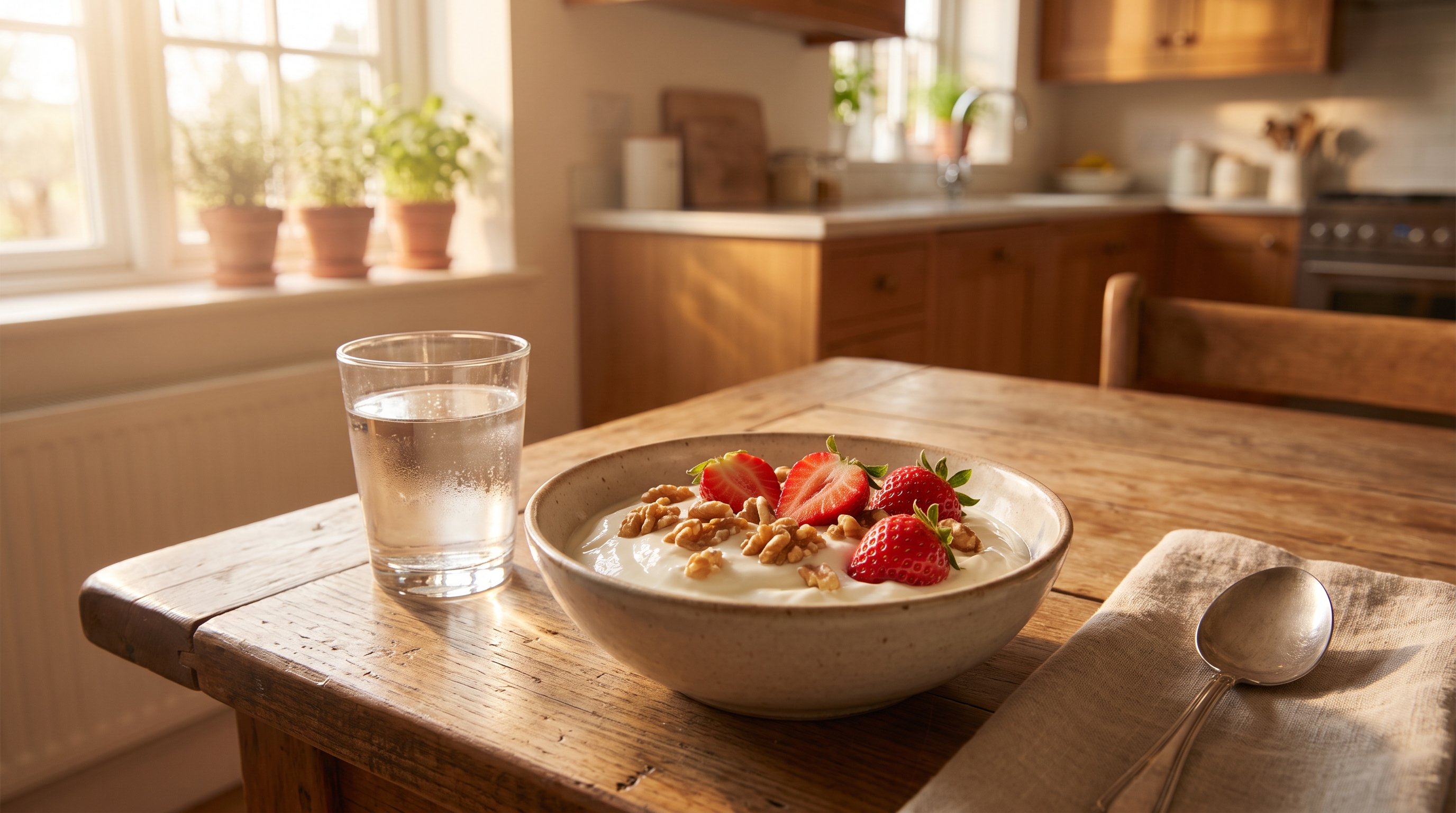
Together, those two things explain why a protein-forward plate feels different from a carb-heavy one of the same size.
How Much Protein Should Actually Be on Your Plate
Spreading Protein Across the Day
Rather than loading it all into one meal, aim to have a solid protein source at breakfast, lunch and dinner so you're not relying on willpower by evening.
Here's a quick look at where protein actually sits across common foods, so you can see which ones pull their weight.
| Food | Protein |
|---|---|
| Chicken breast, 100g | Around 31g |
| Eggs, two large | Around 13g |
| Greek yoghurt, 150g | Around 15g |
| Tofu, 100g | Around 8g |
| Salmon, 100g | Around 20g |
Whole Food Protein Versus Powders and Bars
A protein shake is faster, but a plate of chicken, eggs or fish comes with volume, chewing time and nutrients that a powder doesn't carry.
That volume matters more than people expect, because feeling physically full is part of what stops you reaching for something else an hour later.
Powders and bars have their place when time is tight, but building meals around whole foods is the version that holds up over weeks, not just one busy morning.
Working Protein-Rich Meals Into an Ordinary Week
Nobody has time to weigh chicken breasts every night, which is why the easiest approach is picking two or three go-to proteins and rotating them.
Eggs for breakfast, a tin of tuna or some leftover chicken for lunch, and fish or tofu for dinner covers most of the week without much thought.

A meal plan built around food you already like makes this far less effortful, since the protein choices are already worked into each day instead of being another decision to make.
The Myth That Protein Alone Reshapes Your Body
No food, including protein, can target where your body loses fat from - that's not how the body works, and anything that claims otherwise is selling a shortcut that doesn't exist.
What protein actually does is make a calorie deficit easier to sit in and gives your body material to hold onto muscle while that deficit runs.
The honest version: protein supports the process, it doesn't pick the spots.
What Actually Decides Your Protein Results
Three things matter more than which specific food you choose, and getting these right counts for more than chasing an exact gram target.
The Factors That Matter Most
- Consistency across the week - one high-protein meal does little if the other four meals are carb-heavy with no protein at all.
- Spreading it through the day - three smaller protein hits keep hunger steadier than one large serving at dinner.
- Pairing it with an actual deficit - protein helps you hold a deficit, but it still needs that deficit to be there in the first place.
Mistakes That Quietly Undercut Protein Intake
Relying on Processed Protein Snacks
A lot of protein bars carry sugar alcohols and fillers alongside the protein, so check the label rather than trusting the front of the packet.
Skipping Protein at Breakfast
Starting the day with cereal or toast alone means you're already behind by lunchtime, so add eggs, yoghurt or a protein-rich side to the first meal.
Guessing Portion Sizes
Eyeballing a chicken breast often undershoots the real protein count, so weigh it occasionally until you've got a feel for what 100g actually looks like.
Treating Protein As the Only Variable
Loading up on protein while ignoring everything else on the plate won't make up for a surplus of calories elsewhere in the day.
Making High-Protein Eating Easier With Ketoway
Building a week around the best protein sources is simpler when the planning is already done for you.
Ketoway puts together a customized meal plan that leans on protein-rich foods you already enjoy, so you're not standing in the kitchen trying to work out what counts.
Alongside the meal plan, the app's progress tracking keeps water, weight and fasting windows in one place, so you can see whether the protein habit is actually sticking week to week.

Keto The Easy Way
Burn Fat With Keto
Putting Better Protein Choices Into Tonight's Meal
Pick one meal tonight and swap in a proper protein source - eggs instead of cereal, chicken instead of pasta alone, tofu instead of a side of bread.
Small swaps like that add up faster than a full overhaul, and Ketoway makes the next swap just as easy.
FAQ
It depends on your size and activity level, but spreading protein-rich foods across three meals rather than one is more useful than chasing an exact number.
No, whole foods like eggs, chicken, fish and yoghurt can cover most people's needs without a shake, though powder can fill a gap on a busy day.
Batch-cooking two or three proteins at once and rotating them through the week removes the daily decision, and Ketoway can lay that rotation out for you in advance.
It usually happens when meals feel repetitive, so rotating a handful of protein sources and pairing them with different vegetables or sauces keeps things interesting enough to stick with.
Share this post