How To Meal Prep For The Week: A Simple Low-Carb System
By:Author:Ketoway Editorial
Updated on:October 18, 2026
- What a Prepped Week Actually Looks Like
- How Many Meals to Prep and How Often
- Batch Cooking Versus Cooking Fresh Every Night
- Fitting Meal Prep Into a Real Working Week
- Adapting the System to Different Weeks
- When Meal Prep Habits Usually Start to Slip
- Making Weekly Meal Prep Easier With Ketoway
- Starting Your First Weekly Prep Session
Meal prepping for the week means cooking your main meals in batches on one or two set days, then storing them so the rest of the week needs only reheating or quick assembly.
It works because it removes the moment of decision from every single meal - the plan is already made, the food is already cooked, so tired-and-hungry you doesn't have to negotiate with anything.
This article covers what a prepped week actually looks like, how much to cook and how often, why batching beats daily cooking for most people, and how to fit it around a job, a family or a slow morning.
What a Prepped Week Actually Looks Like
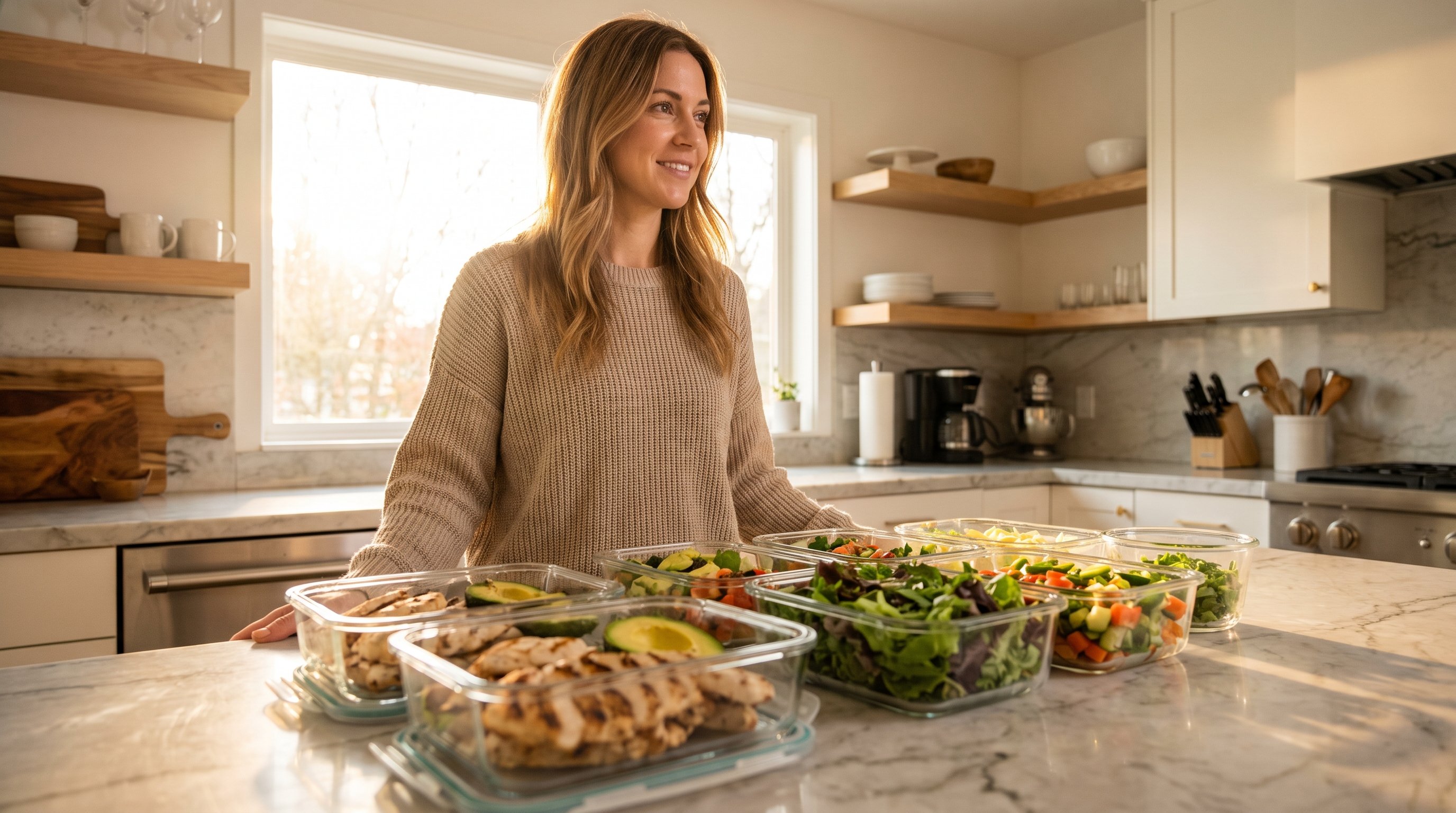
A workable week usually has one main prep session, a short midweek top-up, and a short list of meals that repeat with small swaps.
A Sample Weekly Prep Schedule
- Sunday afternoon - cook two proteins, roast or steam two vegetables, portion into containers for four days
- Monday to Thursday - grab a container, reheat, add a cold element like salad or a sauce
- Wednesday evening - a 20-minute top-up session for anything running low, usually just one more protein
- Friday and weekend - cook fresh or eat leftovers, since the week's main work is already done
The pattern matters more than the exact meals - one big session, one small session, and a few days left loose for whatever the week actually brings.
How Many Meals to Prep and How Often
Matching the Prep Session to Your Week
Most people only need to properly batch cook once or twice a week, not every evening.
The table below gives a starting point based on how many meals you're actually prepping ahead.

| Goal | Prep Sessions | Portions To Make |
|---|---|---|
| Lunches only | 1 per week | 5 portions |
| Lunches and dinners | 1 to 2 per week | 8 to 10 portions |
| All main meals | 2 per week | 12 to 14 portions |
| Snacks plus meals | 2 per week | 14 plus portions |
| Just getting started | 1 per week | 3 to 4 portions |
Starting small - even just lunches - is a reasonable way to test whether the system fits your week before scaling it up.
Batch Cooking Versus Cooking Fresh Every Night
Cooking fresh every night sounds appealing in theory - everything's hot, nothing's stored, no containers to wash in advance.
In practice it asks you to make a food decision and find the energy to cook it on every single one of the seven hardest days of the week, including the ones where you're exhausted or running late.
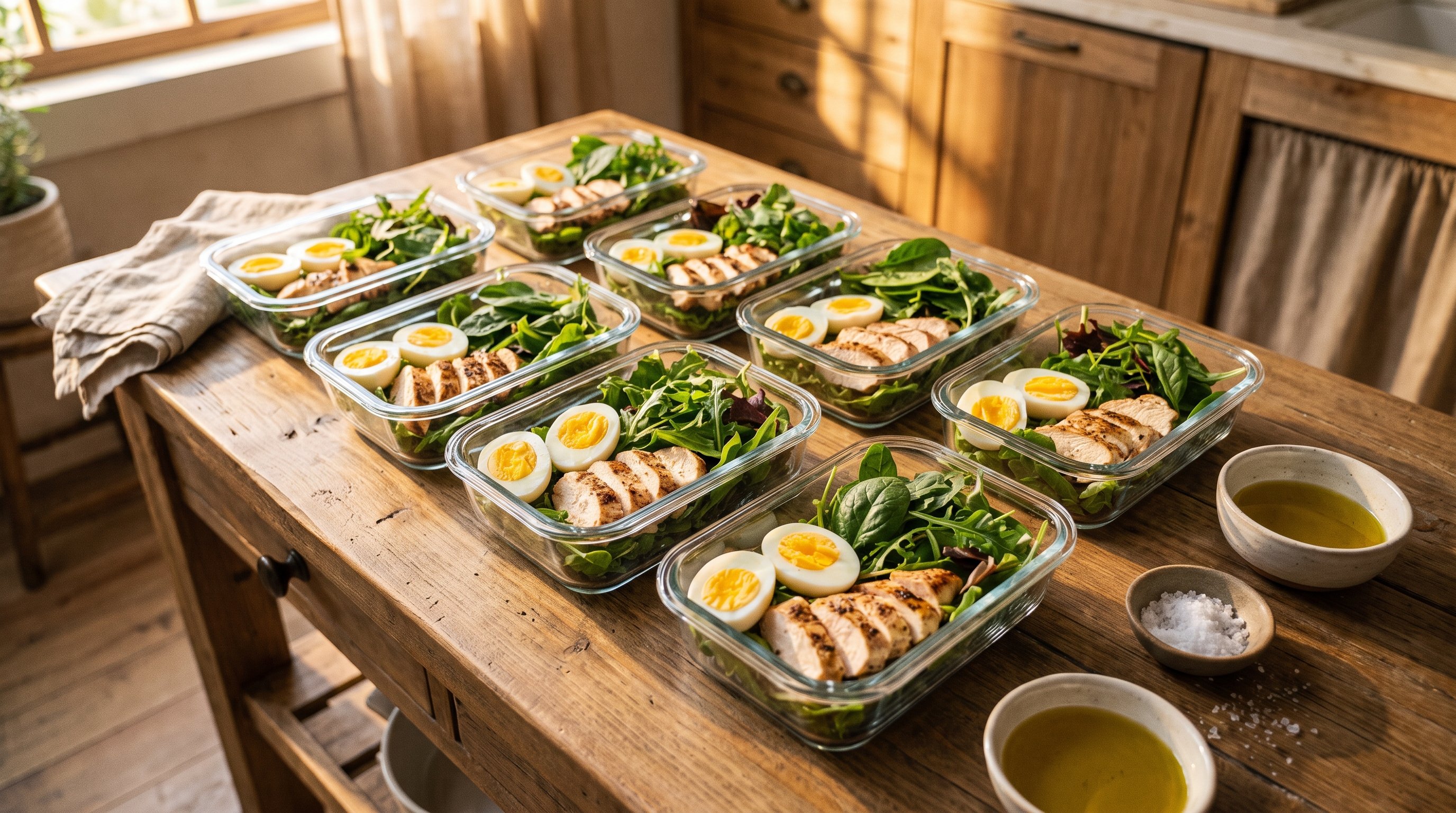
Batch cooking asks for that same effort only once or twice, then coasts on momentum for the rest of the week.
The food itself doesn't need to be different - the win is entirely in how many times you have to show up and make a decision.
Fitting Meal Prep Into a Real Working Week
A single prep session doesn't need a free afternoon - two hours on a Sunday, or even one hour split across two evenings, covers most people's needs.
The part people underestimate isn't the cooking, it's the deciding what to cook - staring at the fridge trying to invent a low-carb week from scratch is where most prep attempts stall.
A meal plan built around food you already like removes that decision entirely, since the list is set before you've even opened the fridge - which is one of the things Ketoway's customized keto meal plans are built to do.
Keeping water, weight and steps logged in one place also means you're not trying to remember five separate habits on top of cooking for the week.
Adapting the System to Different Weeks
If You're New to Meal Prep
Start with just one meal type - lunches are usually the easiest - and pick two or three recipes you already know how to cook rather than trying something new on day one.
If Your Week Is Packed
Two prep sessions instead of one cuts the amount of standing-and-cooking time per session, which is often easier to find than one long block.
If You're Cooking for a Family
Batch the base proteins and vegetables the same for everyone, then let each person add their own sauce, carb side or extra portion at the table.
If You Travel or Work Irregular Hours
Freeze half of what you prep in individual portions, so a disrupted week still has food ready without needing a cooking session that week at all.
When Meal Prep Habits Usually Start to Slip
The first couple of weeks of meal prep usually go fine - the novelty does a lot of the work.
The drop-off point tends to come when the same three meals start to feel repetitive, or when one busy week pushes the prep session back and the whole system falls over.
Expect to need a small rotation of recipes rather than one perfect week repeated forever, and expect to miss a session eventually - picking it back up the next week matters more than never missing one.
Making Weekly Meal Prep Easier With Ketoway
Meal prep gets easier once the hardest part - deciding what to cook - is already handled before you've picked up a knife.
Ketoway builds a keto meal plan around food you already like, so prep day becomes a cooking task instead of a planning task, and the nutrition and health guides give you backup recipes for the weeks when the usual three start to feel stale.
Keto The Easy Way
Burn Fat With Keto
Starting Your First Weekly Prep Session
Pick one day this week, pick two meals you already know how to cook, and make four extra portions of each.
That's the whole system to start with - everything else, like a tailored plan through Ketoway or a second midweek top-up session, can get added once the first week actually sticks.
FAQ
It helps indirectly by making it easier to stick to a lower-calorie or lower-carb pattern, since the decision is already made before hunger shows up. No single prepped meal does the work on its own - consistency over the week is what matters.
Cooking nightly can work if you've got the time and energy every single evening, but most people don't have that reliably. Batch cooking trades a bit more effort upfront for far less effort on the harder days.
Start with one hour and two recipes rather than a full afternoon of cooking - a smaller prep session still beats no prep at all. You can always add a second short session midweek if one isn't enough.
Rotate two or three base recipes and change the sauce, spice or side rather than reinventing the whole meal each week. Ketoway's nutrition guides are a reasonable place to pull fresh ideas from when the usual rotation starts to feel stale.
Share this post