Calisthenics For Beginners: A Simple Way To Start Moving
By:Author:Ketoway Editorial
Updated on:October 18, 2026

- Can Bodyweight Training Reshape One Area Fast?
- What Actually Happens When You Train With Bodyweight
- Three Things That Decide Your Calisthenics Progress
- A Simple Calisthenics Week for Beginners
- Making Calisthenics Work Around a Busy Schedule
- When Beginners Usually Lose Momentum
- Mistakes That Slow Down Beginner Calisthenics
- Pairing Beginner Calisthenics With Ketoway
- Starting Your First Calisthenics Session Today
Calisthenics for beginners means using your own bodyweight - squats, push-ups, lunges, planks - to build strength without a gym or equipment. The direct answer: yes, it works, because muscles respond to resistance and your own bodyweight provides plenty of it when you're starting out.
The mechanism is simple. You load a muscle group past what it's used to, the body adapts by getting a bit stronger, and repeating that over weeks is what builds capacity.
This guide covers what the training actually does, how to structure a first week, what usually derails people, and how to fit it around a normal life.
Can Bodyweight Training Reshape One Area Fast?
This is the myth worth clearing up first: no amount of squats will reshape just your thighs, and no number of push-ups will reshape just your chest.
The body doesn't let you choose where it draws energy from or where it adds muscle definition - that's decided by genetics and overall body composition, not which exercise you picked.
The honest answer is less exciting but more useful: consistent full-body training, done over time, changes how your whole body looks and feels - not one targeted zone.
What Actually Happens When You Train With Bodyweight
There are two mechanisms doing the real work here, and understanding them helps you stop second-guessing the basics.
Muscles Respond to Load, Not to Equipment
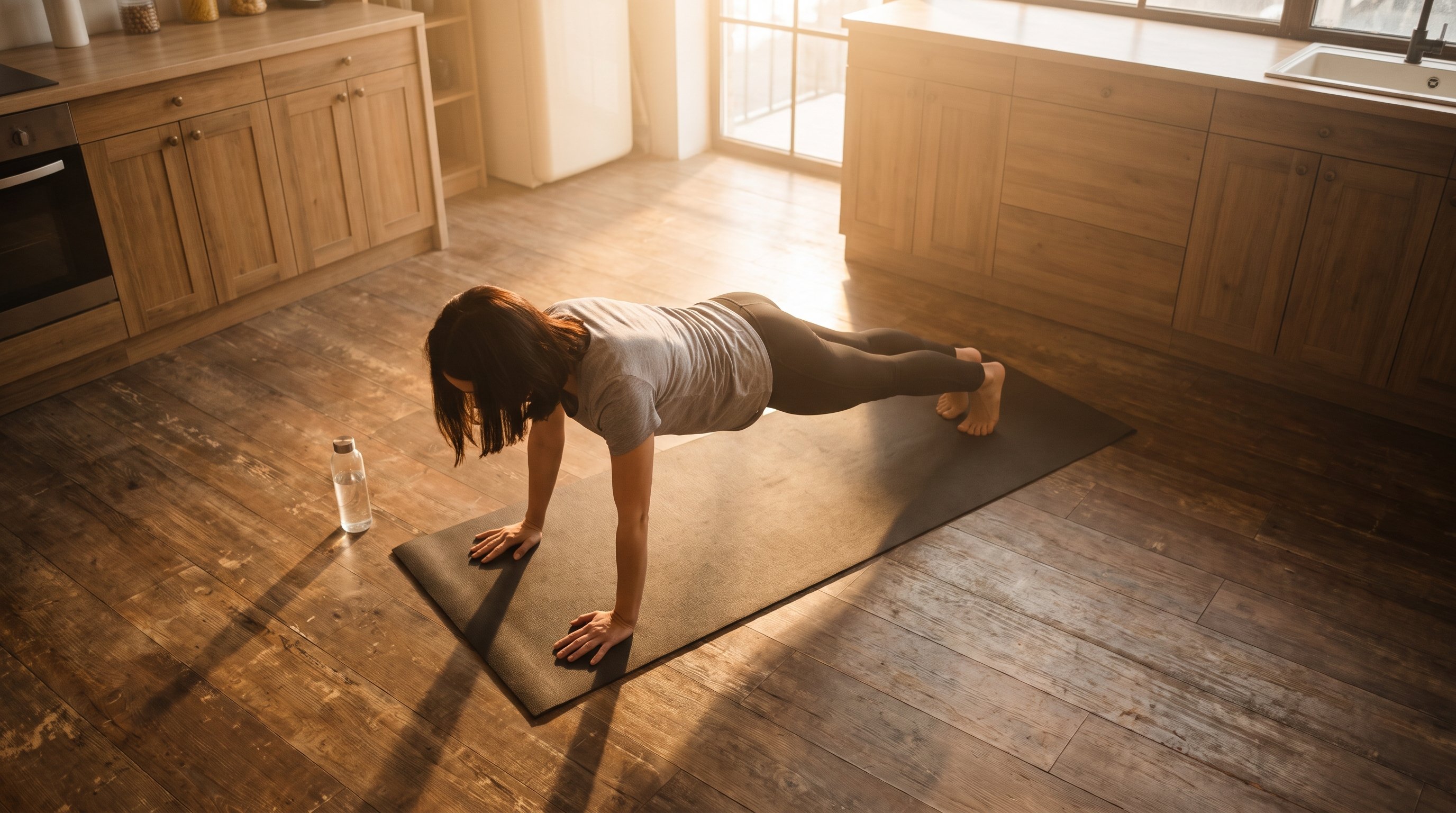
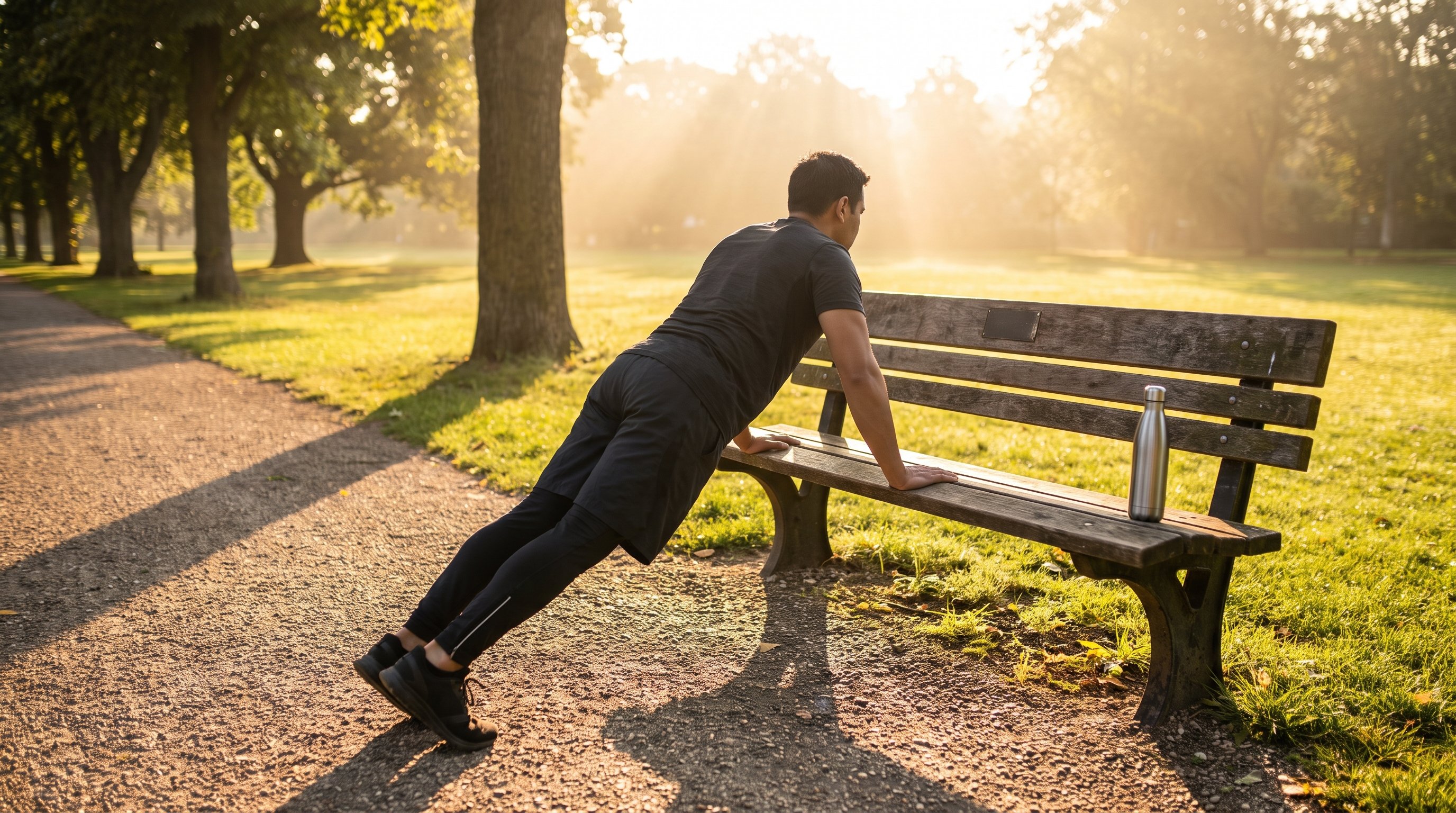
A push-up loads your chest, shoulders and arms the same way a bench press loads them, just with a different resistance curve. Your bodyweight is the weight - as you get stronger, you progress by changing the angle, the tempo or the rep count instead of adding plates.
Repetition Over Weeks Is What Creates Adaptation
A single session doesn't change much on its own. Doing the same movement patterns two or three times a week lets the body adapt gradually, which is why consistency matters more than any single hard workout.
Three Things That Decide Your Calisthenics Progress
Not every factor matters equally. These three carry most of the weight when you're new to bodyweight training.
What Moves the Needle
- Consistency - training two or three times a week, every week, beats one intense session followed by a long gap.
- Progression - making a move slightly harder once it feels easy (more reps, a slower tempo, a harder variation) keeps the body adapting.
- Recovery - muscles adapt between sessions, not during them, so rest days and sleep are part of the training, not time off from it.
A Simple Calisthenics Week for Beginners
Here's a concrete week you can copy without overthinking it. Each session takes 20-30 minutes and needs no equipment.
| Day | Focus |
|---|---|
| Monday | Squats, incline push-ups, plank |
| Tuesday | Rest or light walking |
| Wednesday | Lunges, glute bridges, wall sit |
| Thursday | Rest or light stretching |
| Friday | Push-ups, squats, plank hold |
| Saturday | Light walk or full rest |
Making Calisthenics Work Around a Busy Schedule
Nobody has unlimited time, which is exactly why bodyweight training suits beginners - there's no travel time to a gym, no waiting for equipment, no setup.
A 20-minute session before work or during a lunch break covers the same movement patterns as a longer gym session, just compressed.
If keeping track of sessions alongside everything else feels like one more thing to manage, having steps, water and workouts logged in one place can take that mental load off - which is part of what the Ketoway app's progress tracking is built for.
When Beginners Usually Lose Momentum
There isn't a fixed point at which results show up - it varies by person, starting point and consistency.
What's more predictable is when people quit: usually somewhere in the second or third week, once the initial motivation fades and the routine hasn't become automatic yet.
Getting past that point isn't about trying harder - it's about keeping sessions short enough that skipping them feels harder than doing them.
Mistakes That Slow Down Beginner Calisthenics
Doing Too Much, Too Soon
Starting with daily hour-long sessions usually ends in soreness so bad the next session gets skipped. Shorter, more frequent sessions build the habit before you chase intensity.
Never Progressing the Movement
Doing the exact same ten push-ups for months stops being a challenge fast. Add reps, slow the tempo, or try a harder variation once the current one feels easy.
Skipping Rest Days Entirely
Training sore muscles every single day doesn't speed things up - it just adds fatigue on top of fatigue. Build in at least one or two rest days a week.
Judging Progress by the Mirror Alone
Visible changes take time and aren't the only sign something's working. Tracking reps, sets or how a movement feels week to week gives a clearer picture than appearance alone.
Ignoring What You Eat
Training builds the stimulus, but what's on your plate supports the recovery and energy behind it. A meal plan built around food you already like makes that part easier to sustain.
Pairing Beginner Calisthenics With Ketoway
Bodyweight training handles the movement side of things, but most beginners also want help with the eating and tracking side without overhauling their whole life.
Ketoway brings those pieces together: a customized keto meal plan, light exercise sessions you can do alongside your calisthenics work, and progress tracking for steps, water and weight so you're not juggling separate apps or spreadsheets.
The lifestyle challenges and nutrition guides inside the app are built to keep momentum going past the point where most people usually drop off.

Keto The Easy Way
Burn Fat With Keto
Starting Your First Calisthenics Session Today
The simplest way to start is picking three movements - a squat, a push-up variation and a plank - and doing one short round today, not next Monday.
Pair that with a way of eating that doesn't fight the effort, and the Ketoway app can handle the meal planning and tracking side while you focus on the movements themselves.
FAQ
Bodyweight training builds strength and burns some energy, but weight management mostly comes down to what you eat over time. Pairing training with a sustainable eating plan, like the one inside Ketoway, gives both sides of the equation something to work with.
No - most movements have easier versions, like knee push-ups or assisted squats, that let complete beginners start right away. You scale the difficulty up as strength builds, not the other way around.
Calisthenics is built around needing almost nothing - a few square metres of floor space covers most beginner movements. No bars, bands or weights are required to get started.
Soreness from doing too much too soon, or sessions that feel too long to fit into a real day, are the two most common reasons people drop off. Shorter sessions with built-in rest days tend to stick far longer than ambitious ones.
Share this post