Leg Workout At Home: A No-Gym Way To Build Strength
By:Author:Ketoway Editorial
Updated on:October 18, 2026
- Can Bodyweight Alone Build Stronger Legs?
- Home Leg Training vs the Gym Leg Day
- Why Skipping the Commute Keeps You Training
- Adapting a Home Leg Routine to Your Week
- Making Leg Day Work Around a Busy Schedule
- Can a Home Leg Workout Reshape Specific Areas?
- Pairing a Leg Workout With Ketoway's Support Tools
- Starting Tonight's Leg Session
A leg workout at home works when it uses enough load and enough reps to challenge the muscle - bodyweight squats, lunges and step-ups can do that without a single dumbbell.
Muscles respond to tension and fatigue, not to the brand of equipment causing it. Push a bodyweight move close to failure across enough sets and the legs get the same signal to adapt as they would under a barbell.
This guide covers whether home leg training actually works, how it stacks up against the gym, who it suits, and how to fit it into a week that's already full.
Can Bodyweight Alone Build Stronger Legs?
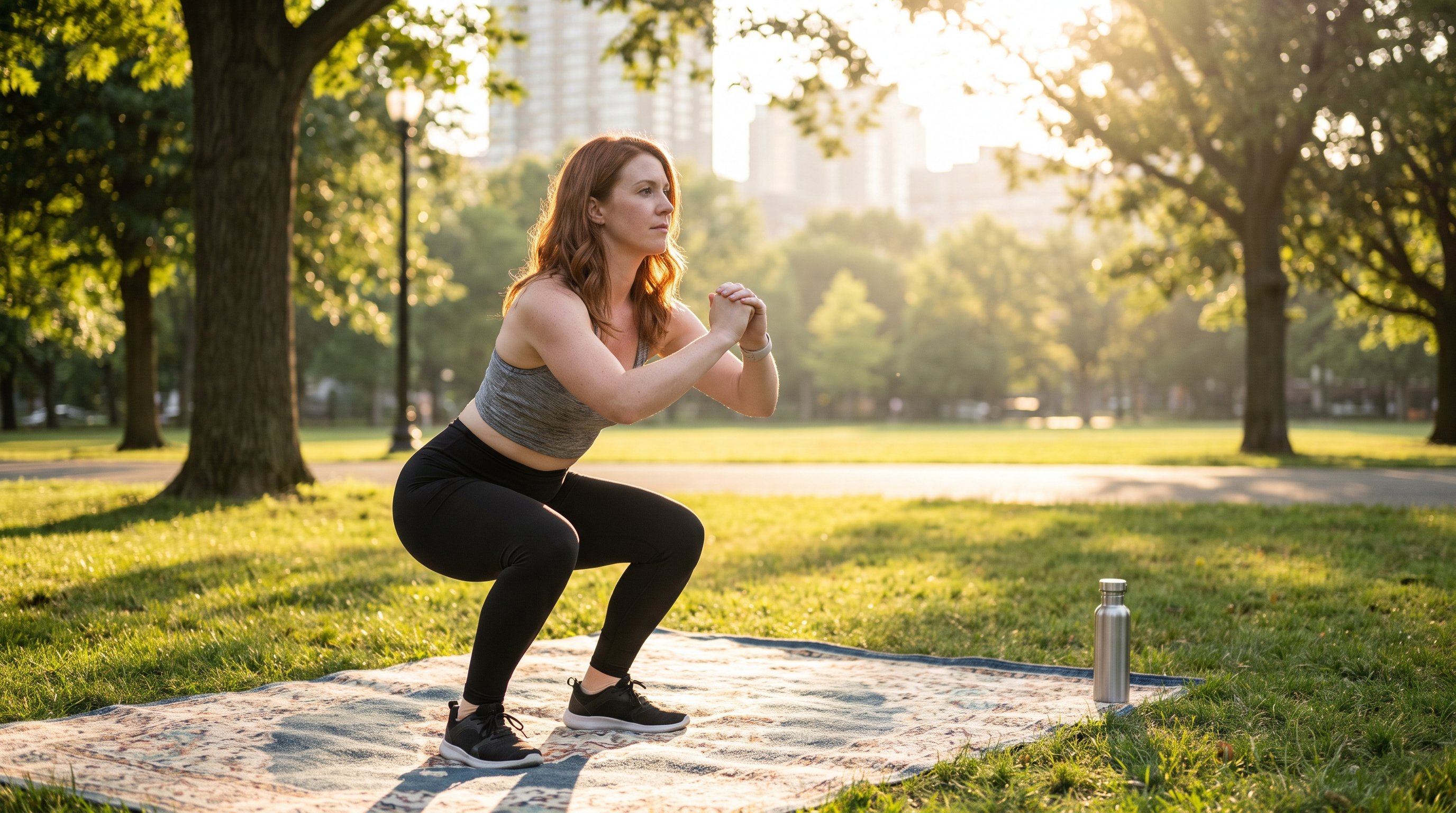
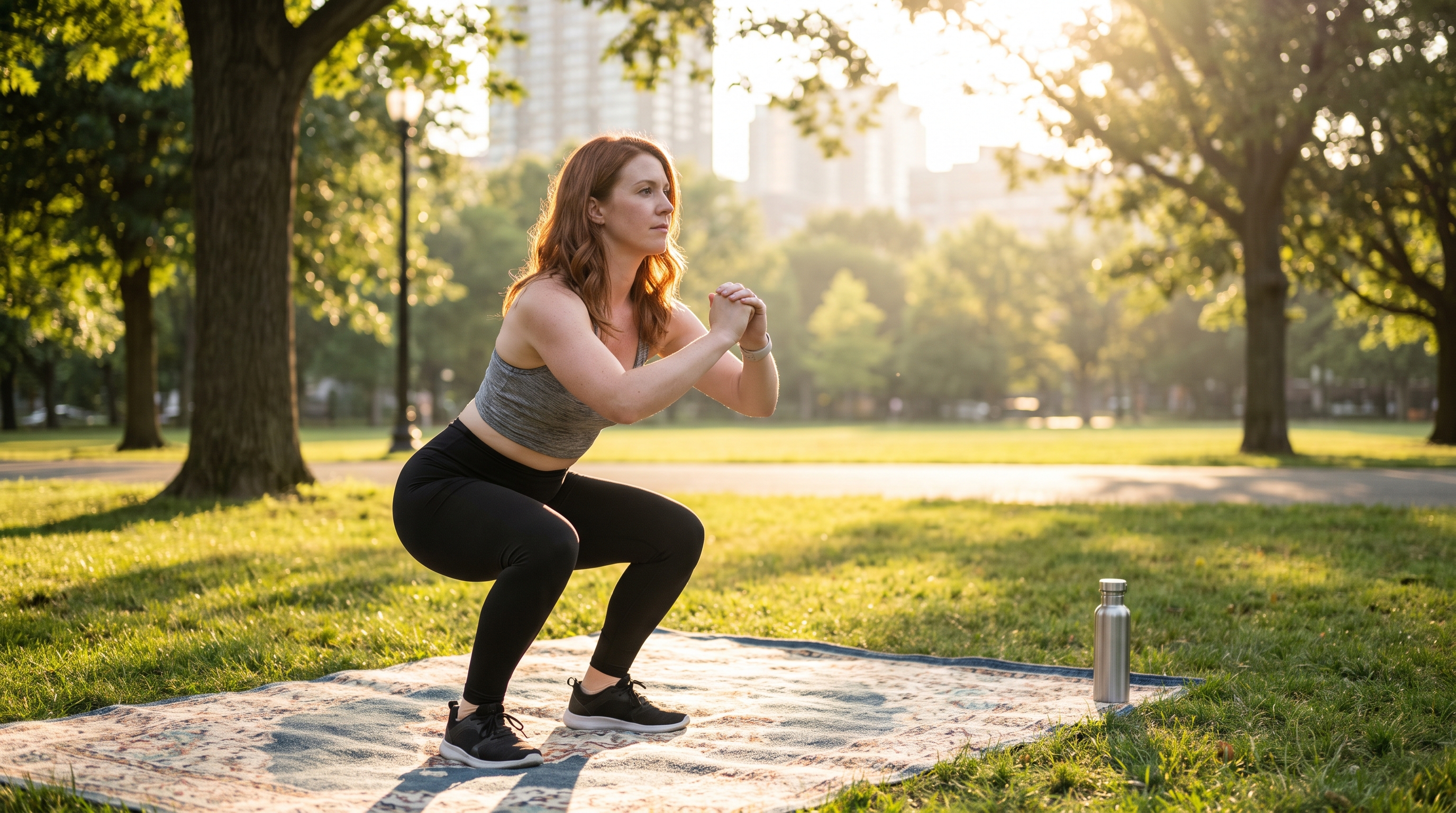
Yes, within limits. A bodyweight squat loads the legs with roughly your own bodyweight each rep, and slowing the tempo or adding single-leg variations increases that load without adding a single kilogram of equipment.
A split squat on one leg, for example, asks that leg to manage close to your full bodyweight on its own - that's a meaningful jump from a two-legged squat, arithmetically speaking.
The honest limit is at the top end: once the legs adapt to bodyweight, further strength gains need either more reps, slower tempo, single-leg work, or eventually external load. For general strength, tone and everyday function, bodyweight training can carry you a long way before that ceiling matters.
Consistency decides more of the outcome than the exact exercise list. Three sessions a week of squats, lunges, glute bridges and calf raises, done properly, adds up to real volume over a month even though no single session looks dramatic.
Home Leg Training vs the Gym Leg Day
The real decision isn't bodyweight versus weights in theory - it's whether you'll actually do a home session tonight versus driving to a gym you might skip.
| Factor | Home Workout | Gym Workout |
|---|---|---|
| Equipment needed | None required | Machines and barbells |
| Time per session | 20 to 30 minutes | 45 to 60 minutes |
| Travel time | Zero | Commute both ways |
| Starting cost | Free | Membership fee |
| Long-term strength ceiling | Needs added load eventually | Higher load available |
Neither option is wrong. The gym offers more headroom for heavy strength work, but the home version removes every excuse between you and the first rep.
Why Skipping the Commute Keeps You Training
Adherence beats intensity. A moderate leg session done three times a week for months will out-produce a brutal gym leg day that only happens twice before motivation fades.
Home training removes the two biggest drop-off points: travel time and the awkwardness some people feel around gym equipment they're not sure how to use.
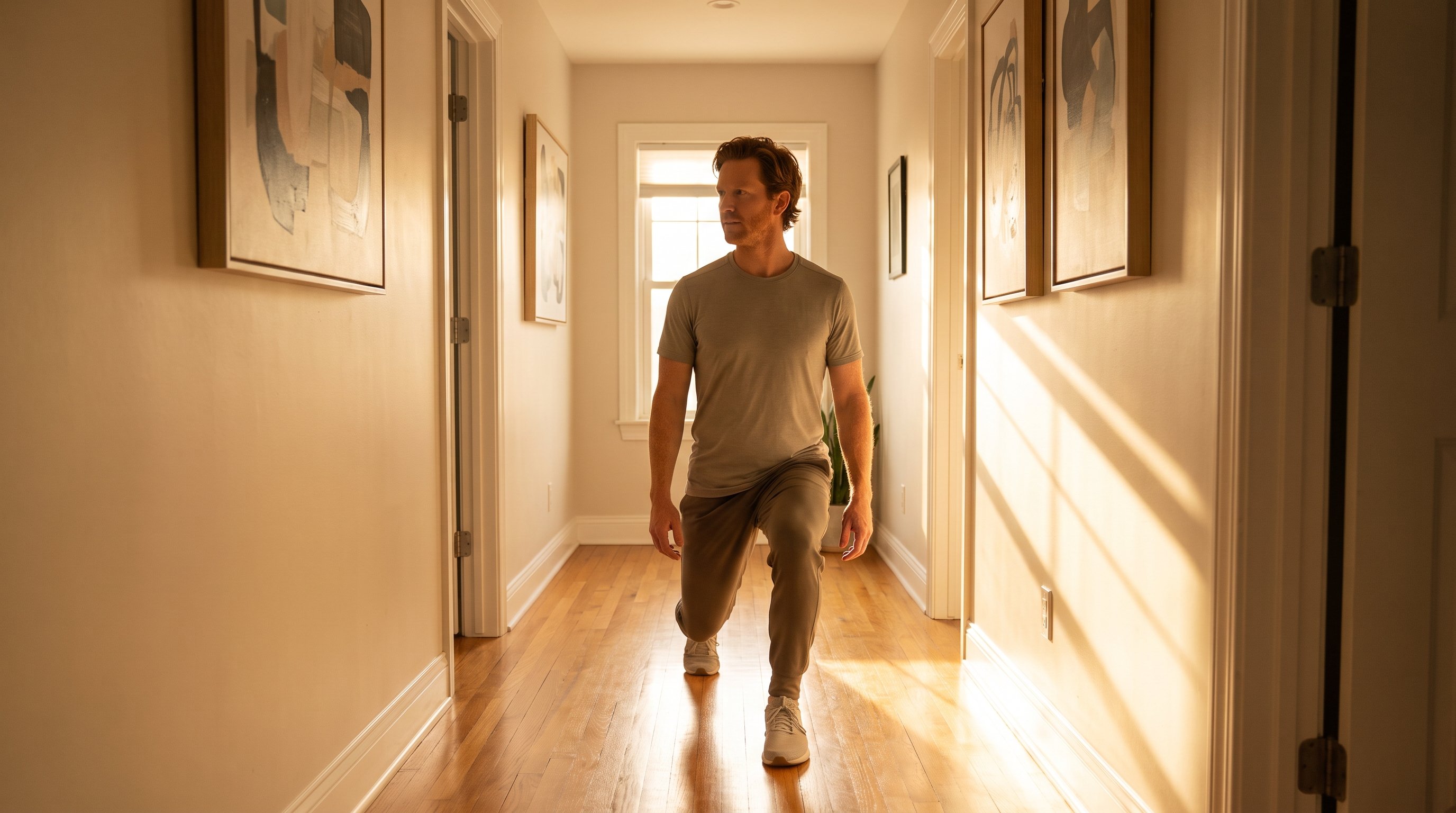
A squat, a lunge and a glute bridge need no instruction manual. That simplicity is what keeps people showing up on the nights they genuinely don't feel like it.
Adapting a Home Leg Routine to Your Week
If You're New to Training Legs
Start with bodyweight squats, glute bridges and calf raises, two to three sets of 10 to 15 reps. Focus on full range of motion before worrying about speed or rep count.
If You're Short on Time
A 15-minute circuit of squats, lunges and step-ups done back to back still counts as a session. Three short circuits a week beats one long one you keep postponing.
If You're Returning After a Break or Managing Joint Sensitivity
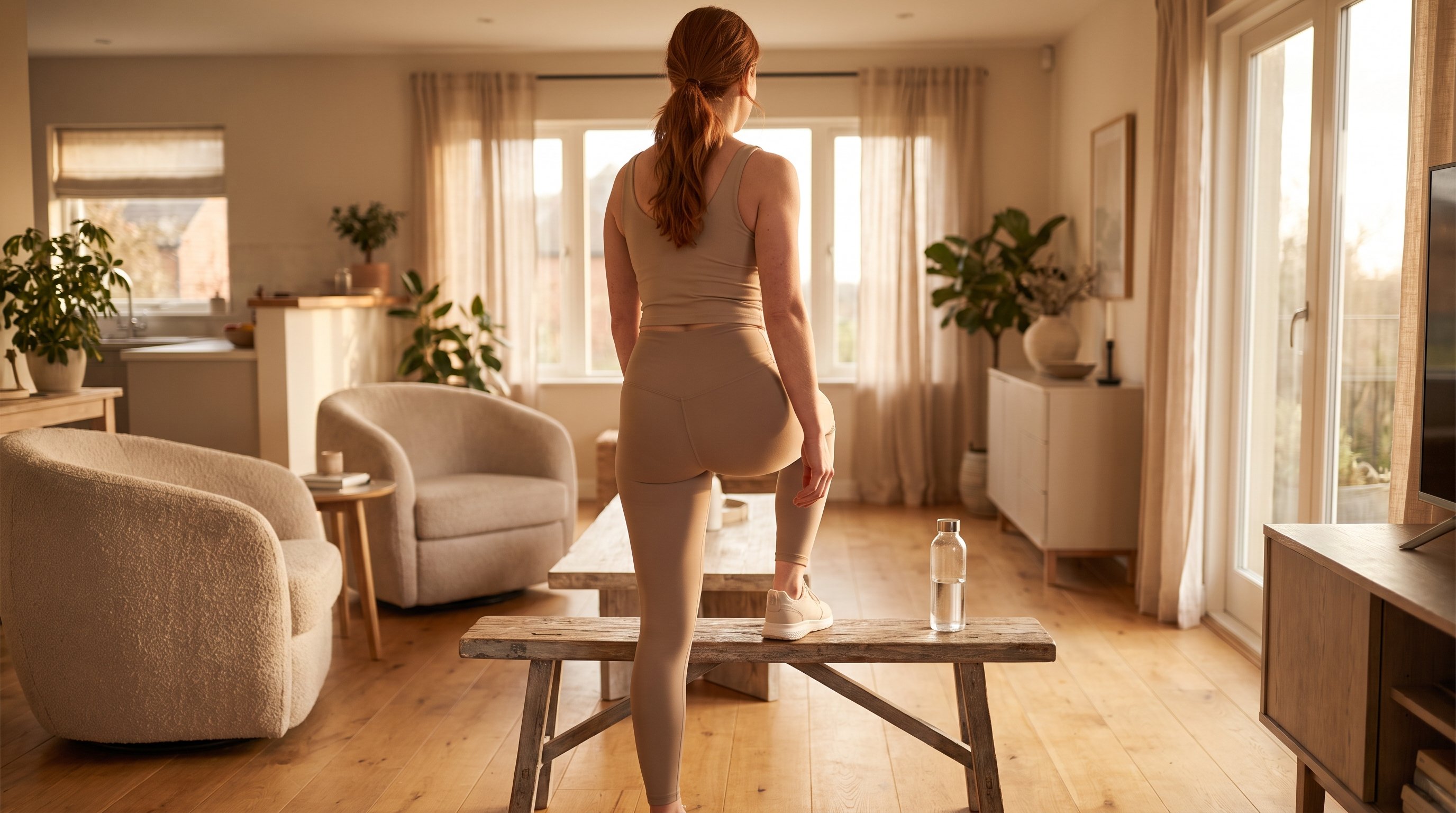
Swap jumping or fast lunges for slower, controlled squats and step-ups, keeping both feet near the floor. Lower impact doesn't mean lower effort - slowing the tempo keeps tension on the muscle longer.
If You Train Most Days Already
Add single-leg variations like Bulgarian split squats or single-leg glute bridges to raise the load per leg without adding equipment. Rotate in a pulse or isometric hold to push past a plateau.
Making Leg Day Work Around a Busy Schedule
The sessions above don't need a gym bag, a drive, or a block of free time you don't have - they fit into a living room between dinner and the evening news.
What usually breaks this kind of routine isn't the exercises, it's the rest of the day falling apart around it - skipped meals, no water, no sense of whether the week is actually adding up to anything.
Keeping steps, water intake and workout sessions logged in one place is where Ketoway fits in - it's built to sit alongside a home workout like this, not replace it, so the training and the habits around it move together.
Can a Home Leg Workout Reshape Specific Areas?
No single exercise can target fat loss from one part of the body, legs included - the body doesn't work that way, and no amount of squats changes that.
Training the legs builds muscle and strength in that area, which can change how the legs look over time, but it doesn't control where the body draws energy from.
Overall fat loss comes from a sustained calorie deficit across the whole body, and where that shows up first is down to genetics, not the exercise selected. The honest answer: train legs because it builds strength and improves how the body moves, not as a shortcut to one specific shape.
Pairing a Leg Workout With Ketoway's Support Tools
A home leg routine builds strength, but what you eat around it decides whether the rest of the week supports or undoes that effort.
Ketoway pairs a customized keto meal plan with light exercise sessions, so the nutrition side and the movement side aren't two separate guessing games.
Progress tracking covers weight, water and steps, and the challenges built into the app give structure to the weeks where motivation alone isn't enough.
Keto The Easy Way
Burn Fat With Keto
Starting Tonight's Leg Session
A home leg workout doesn't need a plan months in the making - squats, lunges, glute bridges and calf raises, done three times a week, is enough to start seeing the legs get stronger.
Pick one circuit, do it tonight, and let consistency do the rest - and if the nutrition side needs structure too, Ketoway's meal plans and tracking tools are built to sit alongside exactly this kind of routine.
FAQ
Yes - bodyweight squats, lunges and single-leg variations load the muscle enough to prompt growth, especially for anyone newer to training. Over time, adding reps, slowing tempo or moving to single-leg work keeps the challenge going.
A two-legged squat is easy once the body adapts, but a single-leg split squat asks one leg to manage close to full bodyweight alone. The exercises can be made harder without ever touching a dumbbell.
A hallway or a clear patch of living room floor is enough for squats, lunges and step-ups. Fifteen minutes in a small space still counts as a session worth doing.
Momentum tends to fade when the rest of the day - meals, water, sleep - isn't tracked alongside the training. Keeping all of it in one place, the way Ketoway's tracking tools do, makes it easier to see the week as a whole rather than one workout in isolation.
Share this post