Morning Stretches: A Practical Guide To Starting The Day Right
By:Author:Ketoway Editorial
Updated on:October 18, 2026

- Does a Few Minutes of Stretching Really Help?
- Stretching at Home Versus a Studio Class
- Why the Low-Effort Option Keeps Winning
- Adjusting a Stretch Routine to Fit You
- Fitting a Morning Routine Around Everything Else
- The Myth That Stretching Changes Your Shape
- Pairing a Morning Routine With Ketoway
- Making the Habit Last Past the First Week
A few minutes of gentle movement after waking loosens stiff joints and gets blood flowing before the day asks anything of you. That's the honest answer: it's not magic, it's just your body warming up before you expect it to perform.
Overnight, you've been still for hours. Muscles tighten, circulation slows, and joints can feel stiff until something nudges them back into motion - a short stretch routine is that nudge.
This guide covers whether the habit actually does anything, how it compares to other ways of waking the body up, who it suits, and how to build it into a morning that's already busy.
Does a Few Minutes of Stretching Really Help?
The mechanism is simple: stretching lengthens muscle fibres and takes joints through their range of motion, which loosens tissue that's been static for hours.
It won't change your weight or reshape any part of your body - that's not what it's for. What it does is make the first hour of your day feel less stiff and more ready for movement.
The Arithmetic of a Short Routine
Five to ten minutes of stretching is a small slice of your waking day. Spent consistently, that adds up to a habit you can actually keep, rather than a workout you keep postponing.
There's no study to quote here and none is needed - this is just what happens when you move a joint through its full range after hours of stillness.
Stretching at Home Versus a Studio Class
Most people weighing this up are choosing between a few minutes on their own bedroom floor and a scheduled class somewhere else.
Here's how the two stack up on the things that actually decide whether you stick with it.

| Factor | At Home | Studio Class |
|---|---|---|
| Time needed | 5 to 10 minutes | 45 to 60 minutes |
| Travel required | None | To and from venue |
| Cost | Free | Class fee |
| Scheduling | Any time you wake | Fixed class times |
| Equipment | None needed | Mat often provided |
Neither option is wrong. One just removes almost every excuse you could give yourself on a Tuesday morning.
Why the Low-Effort Option Keeps Winning
A studio class demands planning, travel, and a fixed slot in your day. A few floor stretches demand none of that, which is exactly why one survives a busy week and the other gets skipped.
Adherence beats intensity almost every time. A routine you can do half-asleep in your pyjamas will outlast one that needs a bag packed the night before.
The goal isn't the hardest version of the habit - it's the version you'll still be doing in a month, when the novelty has worn off and the alarm still feels too early.
Adjusting a Stretch Routine to Fit You
If You're Just Starting Out
Keep it to three or four simple moves - a neck roll, a forward fold, a gentle twist. There's no need to chase a full routine on day one; consistency matters more than range.
If Mornings Are Already Rushed
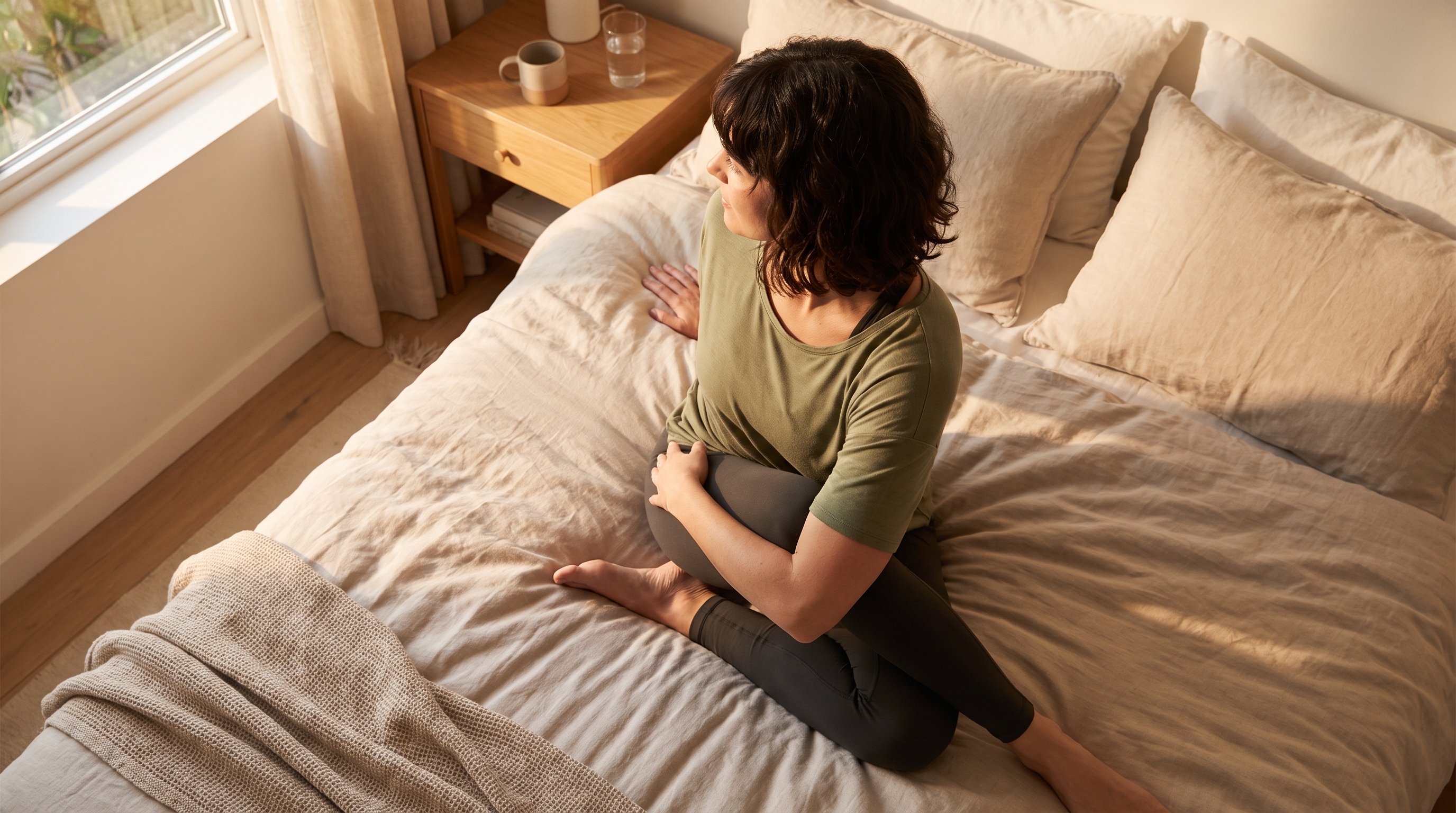
Do it in bed before your feet even hit the floor. A seated spinal twist and a few shoulder rolls take under two minutes and need zero extra time carved out.
If Joints Feel Stiffer With Age
Move slower and hold each position a touch longer rather than pushing for a deeper stretch. Gentle and repeated beats forceful and occasional.
If You Train Later in the Day
Treat the morning routine as separate from your workout warm-up - it's about waking the body up, not preparing it for load. Save the more dynamic movement prep for right before you train.
Fitting a Morning Routine Around Everything Else
The trick isn't finding more time, it's attaching the habit to something you already do - right after the alarm, right before the kettle boils.
Stack it onto an existing cue and it stops needing willpower at all.
This is also where tracking helps, because a habit you can see is a habit you're more likely to keep - progress tools let you log small daily actions like this alongside water, steps and weight, so the stretch routine doesn't quietly disappear after a fortnight.
The Myth That Stretching Changes Your Shape
No amount of stretching will reshape, tone, or slim any specific part of your body - that's not how muscle or fat tissue works.
Stretching lengthens and loosens, it doesn't burn or sculpt anything. What it genuinely offers is less stiffness and an easier start to the day, which is a smaller promise but an honest one.
If reshaping any part of your body is the actual goal, that comes down to the deficit you run and the strength work you do over weeks and months, not a few minutes of stretching.
Pairing a Morning Routine With Ketoway
A stretch routine sets the tone for the day, but what you eat and how you move the rest of it is what actually drives change over time.
Ketoway builds a tailored keto meal plan around food you already like, so the eating side of the day doesn't need constant decisions - and its light exercise sessions give you guided, low-impact movement to pair with a loosened-up morning.
Between the meal plan, the step and water tracking, and the lifestyle challenges, Ketoway gives the rest of your routine the same kind of structure a morning stretch gives your body.

Keto The Easy Way
Burn Fat With Keto
Making the Habit Last Past the First Week
Pick three stretches, attach them to waking up, and give it a fortnight before judging whether it's worth keeping. Most people find it is, simply because it costs so little to try.
If the rest of your day needs the same kind of easy structure, Ketoway's meal plans and tracking tools are built to carry that same low-effort consistency into what you eat and how you move.
FAQ
Not directly - stretching doesn't burn meaningful energy or change body composition on its own. Weight management comes down to the food you eat and your overall activity, which is where a structured plan like Ketoway's meal plans does the heavier lifting.
No - stiffness is the reason to start, not a reason to skip it. Gentle, small-range movement is exactly what eases stiffness over time, so there's no version of your flexibility that's too limited to begin.
Two minutes in bed before you sit up still counts and needs no extra time carved out of the morning. Attaching it to the alarm rather than a separate slot is usually what makes it fit.
Usually because the habit was never attached to an existing routine, so it relies on memory and willpower alone. Logging it somewhere visible, the way you might track water or steps, tends to keep it going longer than relying on remembering.
Share this post